
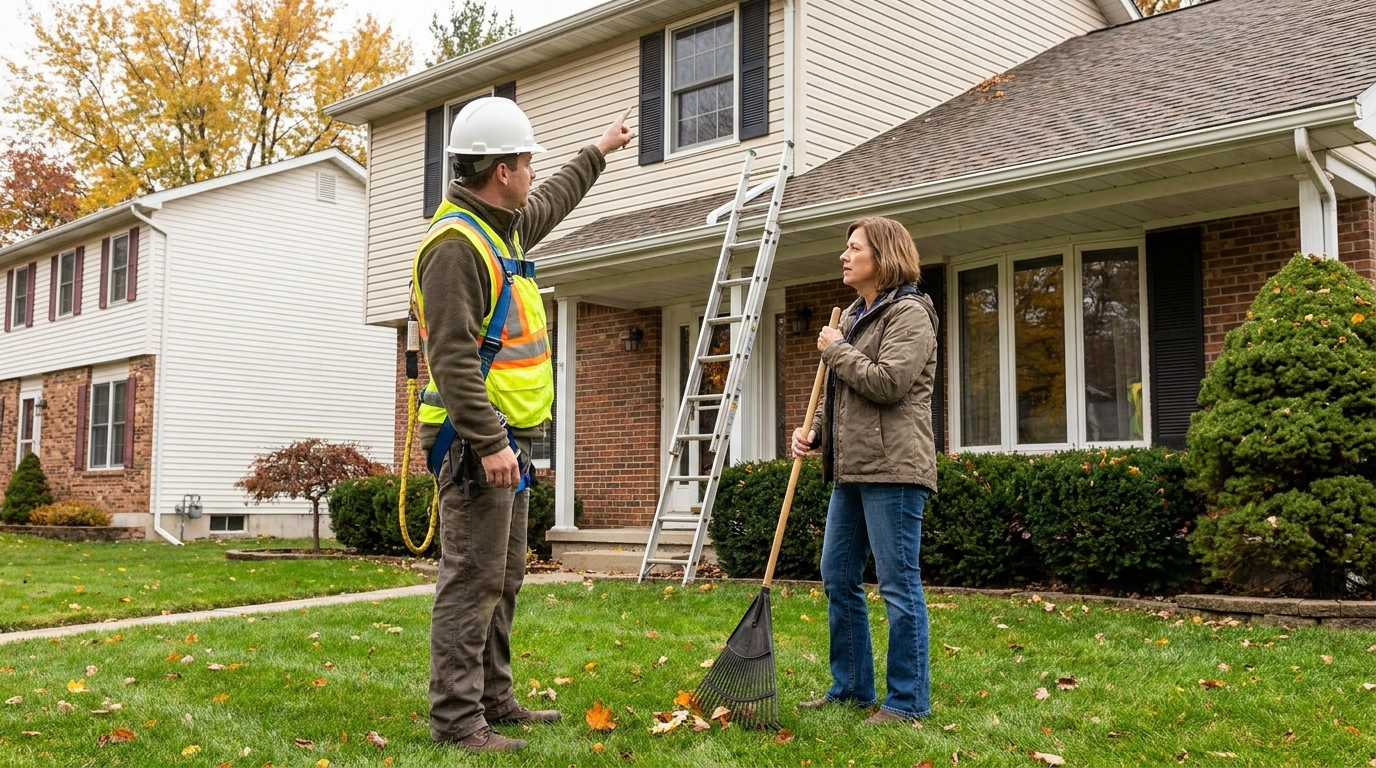
A Homeowner Checklist for Safe Seasonal Observations
Use this page for observations you can make from the ground or a safely accessible indoor space. It does not replace a contractor’s inspection and does not require climbing onto the roof. For the inspection scope to request from a professional, see the ten-point roofer inspection checklist. For how weather affects siding, windows, and other exterior materials, see the separate seasonal exterior lifespan guide.
Why Seasonal Roof Maintenance Matters
The average roof in Northern Virginia faces 15-20 years of sun exposure, wind gusts, hail, snow loads, and temperature swings. Small issues like a lifted shingle or clogged gutter can escalate into water damage, mold, and structural rot. A proactive maintenance routine adds years to your roof life and prevents costly emergency repairs.
Impact Exteriors recommends a seasonal inspection cycle that aligns with our local weather patterns. Here is what to do each season to keep your roof in peak condition.
Spring: Assess Winter Damage
After the freeze-thaw cycles of a Virginia winter, spring is the time to inspect for damage:
- Check for loose or missing shingles: Ice dams and wind can lift shingles. Walk around your property and look for debris or shingle granules in gutters.
- Inspect flashing: The metal around chimneys, vents, and skylights is vulnerable to expansion and contraction. Look for gaps or rust.
- Clean gutters thoroughly: Remove leaves, pollen, and winter debris. Clogged gutters cause water backup under shingles.
- Look for moss or algae: Spring moisture can trigger growth. Ask a roofer about cleaning methods suitable for your roofing material; avoid pressure washing shingles.
- Check attic ventilation: Spring humidity reveals ventilation problems. Look for condensation or musty odors in your attic.
Summer: Protect Against Heat and Storms
Virginia summers bring intense UV exposure and sudden thunderstorms. Here is your summer checklist:
- Trim overhanging branches: Trees that touch your roof scratch shingles and provide a highway for pests. Trim them back 6-10 feet.
- Inspect after severe storms: Check for hail damage, wind-lifted shingles, and debris impact. If you suspect storm damage, call us for a free inspection.
- Check for blistering or curling: Extreme heat causes shingles to warp. Early signs mean your roof is aging faster than expected.
- Ensure attic insulation is adequate: Poor insulation lets heat radiate into living spaces, raising AC bills.
Fall: Prepare for Winter
Fall is the most critical maintenance season. You want your roof in perfect shape before the first freeze:
- Clean gutters again: Fall leaves are the biggest culprit for winter ice dams. Consider gutter guards.
- Check for animal damage: Squirrels and raccoons look for warm nesting spots as temperatures drop. Inspect for chewed vents or gaps.
- Schedule a professional inspection: Impact Exteriors offers pre-winter roof inspections that identify issues you cannot see from the ground.
- Report suspect gaps around pipes and vents: Ask a professional to assess flashing, air leakage, insulation, and ventilation rather than seal openings yourself.
Winter: Monitor and Respond
During winter, most maintenance is reactive. Here is what to watch:
- Monitor ice dam formation: Icicles hanging from gutters are a warning sign. Ice dams force water under shingles and into your home.
- Remove snow buildup: Heavy snow loads stress roof structures. If accumulation exceeds 6 inches, consider professional removal.
- Check interior ceilings: Winter leaks often show up as water stains on ceilings or bubbling paint. Catch them early.
- Do not DIY in winter: Roofs are slippery and dangerous. Leave winter repairs to our emergency team.
When to Call a Professional
While DIY maintenance saves money, some tasks require a professional roofer. Impact Exteriors offers annual maintenance plans that include two inspections per year, gutter cleaning, and minor repairs. For the cost of one emergency repair, you get peace of mind all year long.