
Summary:
Roof moss, algae, and lichen affect shingles in different ways, making it essential to identify the type of growth and assess the roof’s overall condition before deciding between cleaning, repairs, or replacement. Safe removal methods, moisture control, and regular inspections help prevent further damage and support informed roof maintenance decisions.
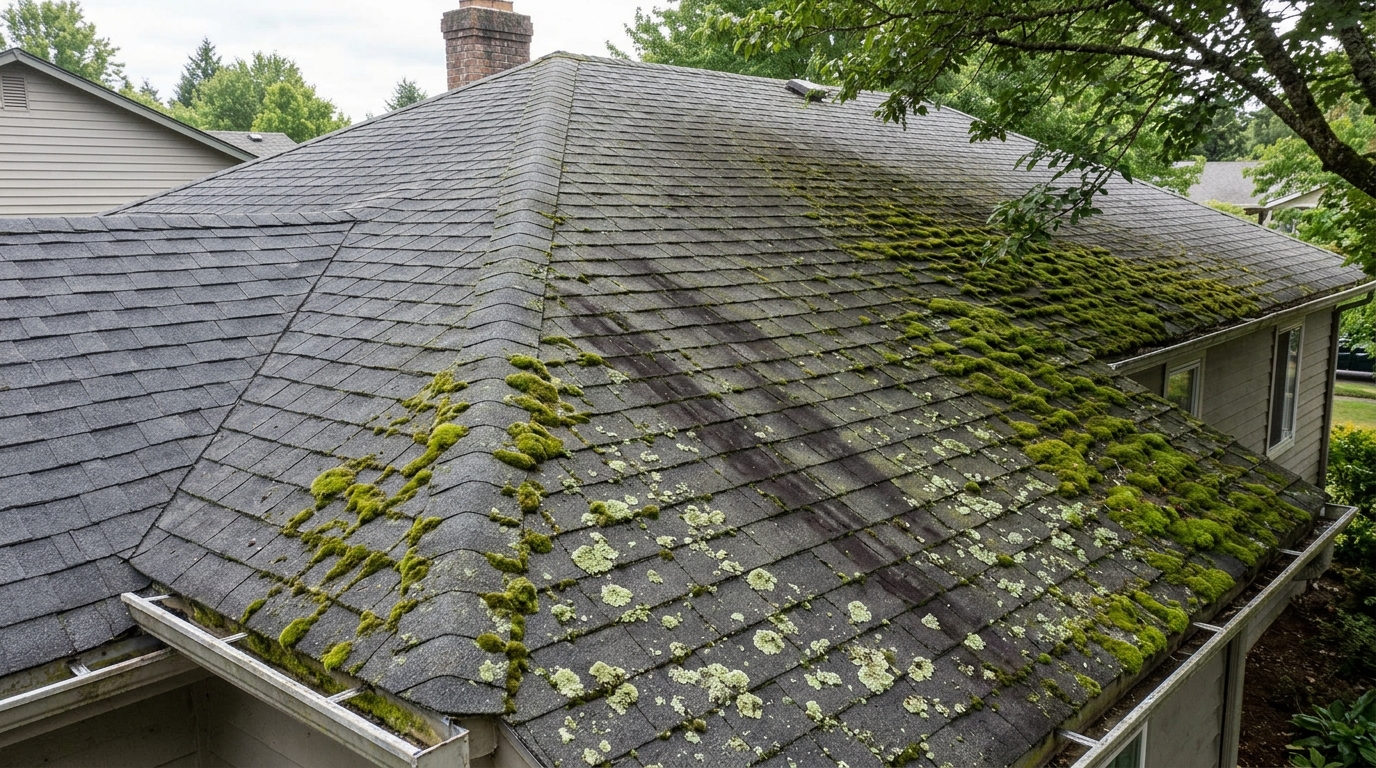
Green patches, dark streaks, and crusty growth on roof shingles can make a home look neglected. However, these signs do not automatically mean the roof needs replacing. Understanding the difference between roof moss and algae is an important first step because each type of growth affects the roof differently. Lichen also deserves attention, especially when it becomes established on older shingles.
The right decision depends on the type of growth, the roof’s overall condition, and the extent of any underlying damage. In many cases, professional cleaning can restore the roof’s appearance.
What Is Growing on Your Roof? Know the Difference
Moss, algae, and lichen may appear similar from the ground, but their characteristics can help identify the problem.
| Roof growth | What it looks like | Potential concern |
| Moss | Thick, green, soft patches | Traps moisture and can lift shingles |
| Algae | Dark streaks or green discoloration | Mainly affects appearance |
| Lichen | Flat, crusty patches in gray, green, or yellow | Can be difficult to remove without damaging shingles |
Moss thrives in damp, shaded areas, particularly beneath overhanging trees. Algae spreads through airborne particles and often creates dark streaks on asphalt shingles. Lichen is a combination of a fungus and a photosynthetic partner, forming a firmly attached growth that can be difficult to remove safely.
Identifying the growth helps determine the appropriate treatment. Aggressive cleaning can cause more harm than the original problem, especially when shingles are already fragile.
Could Roof Growth Be Hiding a Bigger Problem?
Not every roof stain signals serious damage, but some growth deserves attention. Moss retains moisture and can lift shingle edges, interfere with drainage, and contribute to granule loss or leaks over time. Algae typically causes dark, cosmetic staining, while lichen attaches firmly to shingles and can be difficult to remove without damaging their protective granules.
Before choosing cleaning or replacement, assess the roof’s age, shingle condition, and signs of water intrusion. An inspection can help determine if the growth is superficial or linked to more serious roofing problems.
Clean It or Replace It? Let the Roof’s Condition Decide
The presence of moss, algae, or lichen alone is not a reason to replace an entire roof. The decision should reflect the condition of the roofing system, not just its appearance.
· When Cleaning Is Usually Enough
Professional cleaning can help when shingles remain intact, and growth is mainly cosmetic, particularly dark algae streaks and limited moss.
· When Repairs May Be the Better Option
If moss has lifted a few shingles or caused localized damage, targeted repairs may be enough. A roofing professional can inspect the affected area for leaks and deterioration.
· When Replacement Makes More Sense
Widespread cracking, curling, missing shingles, persistent leaks, or rotting roof decking may indicate the need for replacement. Cleaning cannot restore damaged shingles or structural components.
The important distinction is between removable growth and permanent damage. Cleaning cannot restore deteriorated shingles or repair a compromised roof deck.
How to Clean Roof Moss Safely Without Damaging Shingles
Roof cleaning requires care because the wrong technique can shorten a roof’s service life. Working at height also presents a serious fall risk, so professional assistance is generally the safest choice.
· Choose a Roof-Compatible Treatment
Use a treatment approved by the roofing manufacturer. Follow product instructions carefully and protect nearby plants from chemical runoff.
· Avoid Pressure Washing and Harsh Scraping
High-pressure water can strip protective granules and force moisture beneath shingles. Sharp tools and aggressive scraping can also damage the surface. Allow treated moss to loosen gradually when appropriate.
· Address the Conditions That Encourage Growth
Trim overhanging branches to improve sunlight and airflow. Keep gutters clear and remove leaves and debris safely. Reducing persistent moisture can help limit regrowth, although it cannot prevent moss from returning completely.
For homeowners who need professional roof moss cleaning, contact Impact Exteriors today to discuss the roof’s condition and suitable next steps before the growth leads to more serious concerns.
What You Need to Know About Roof Algae Causes and Solutions
Algae commonly develops when airborne organisms settle on damp shingles. Warm, humid weather, limited sunlight, and moisture from nearby trees can encourage visible staining. North-facing roof sections may be particularly susceptible because they often remain shaded for longer.
The most practical solutions depend on the severity of the staining:
- Use approved cleaning methods: Follow the shingle manufacturer’s guidance or ask a roofing professional to treat the stains.
- Improve roof drainage: Keep gutters and downspouts clear to prevent unnecessary moisture buildup.
- Reduce persistent shade: Trim suitable branches to allow better airflow and sunlight.
- Consider algae-resistant shingles: If replacement is already needed, ask about shingles designed to resist blue-green algae discoloration.
Algae staining can return, so prevention and periodic inspections matter. Avoid adding metal strips or applying chemicals without checking manufacturer recommendations and installation requirements.
When to Replace Roof With Moss Growth
Replacing a roof with moss growth takes more than a visual check. A thick green covering can look alarming, but the underlying shingles may still be serviceable after proper treatment.
Look for warning signs such as recurring leaks, widespread shingle damage, exposed underlayment, sagging roof sections, or evidence of rotting decking. Inside the home, ceiling stains and damp attic materials may indicate water intrusion. These problems warrant a prompt professional assessment.
If the roof is nearing the end of its expected service life and has extensive damage, replacement may offer a more sensible long-term solution than repeated repairs. If the shingles remain sound, removing the growth and correcting moisture-related conditions may be sufficient.
A qualified roofing professional can inspect the roof, identify hidden damage, and explain the likely costs and benefits of cleaning, repairing, or replacing it.
FAQs
- Does moss damage roof shingles?
Yes, moss can damage shingles when it grows unchecked. It retains moisture, may lift shingle edges, and can contribute to granule loss and leaks. Early professional treatment can help limit further deterioration.
- Can a roof with black algae streaks be saved?
Often, yes. Black algae streaks are usually cosmetic and do not necessarily mean the shingles need replacing. Manufacturer-approved cleaning can improve the appearance, provided the roof is otherwise in good condition.
- Can lichen be removed without replacing the roof?
In many cases, yes. A professional can assess the lichen and determine an appropriate treatment. Because lichen attaches firmly to shingles, forceful scraping may cause damage. Replacement is generally considered when the roof has significant underlying deterioration, not simply because lichen is present.
Conclusion
Moss, algae, and lichen do not all pose the same risk. Algae often affects appearance, while established moss can trap moisture and contribute to shingle damage. Lichen presents a different challenge because removing it without harming the roof can be difficult.
A careful inspection helps separate cosmetic problems from structural concerns. Cleaning is often appropriate for a sound roof, repairs can address localized damage, and replacement becomes necessary when deterioration is widespread.
Protect your roof from recurring moss, algae, and lichen with help from Impact Exteriors. Use a seasonal roof maintenance checklist to keep inspections, gutter cleaning, and roof growth prevention on track throughout the year. Schedule a professional roof inspection now!