
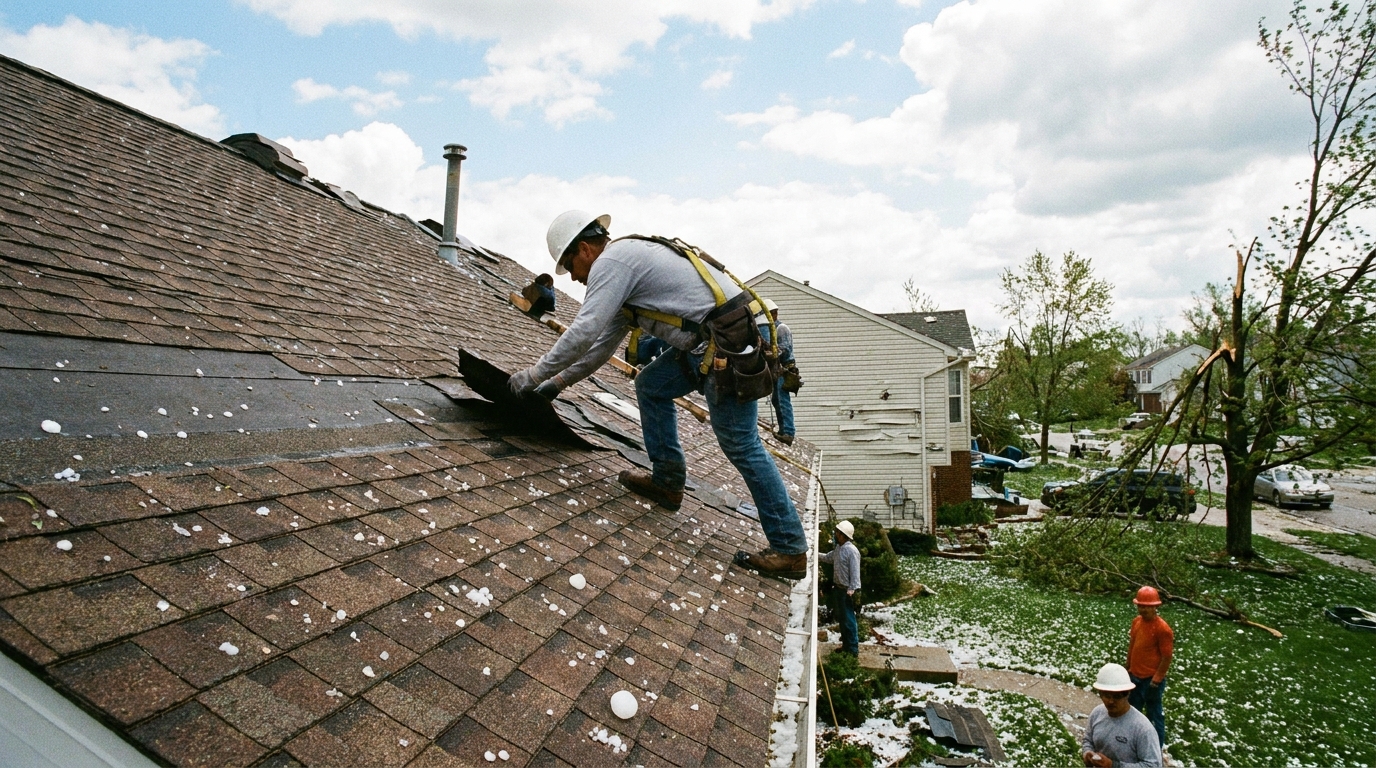
What to Do First After Hail Hits Your Roof
Wait until conditions are safe, observe the property from the ground, photograph visible changes, and arrange professional help for leaks or exposed roofing. Notify your insurer promptly if you intend to report damage; do not delay notification while waiting for a contractor. A roof inspection documents condition, while the insurer determines coverage under your policy.
Step One: Stay Safe and Do a Ground-Level Assessment
Before anything else, safety. Walking on a hail-damaged roof is dangerous; the surface may be compromised, debris may be wet and slick, and structural damage is possible in significant storms. A ground-level assessment gives you your first look at what the storm did without putting yourself at risk.
Check for the following from the yard and driveway: dented gutters, bent downspouts, dents on HVAC equipment, siding damage, and any debris that has landed on the roof surface.
Step Two: Document Everything Before Anything Is Touched
Documentation is one of the most direct levers you have over the outcome of your hail damage claim. Build a clear, timestamped record of the damage before any repairs are made.
- Photograph the full roof from every accessible angle, plus close-ups of any visible impact marks, missing or cracked shingles, and damaged flashing.
- Photograph and video gutters, downspouts, siding, HVAC units, window trim, and outdoor furniture
- Back everything up to cloud storage immediately
- Note the date and time of the storm; confirm it against NOAA storm records if possible.
Video walkthrough footage captures context and scale that still photographs can miss. Use both.
Step Three: Make Emergency Repairs Only
If the storm has left the roof exposed, such as missing shingles, damaged flashing, or open sections, then temporary weatherproofing is appropriate and necessary. Arrange professional tarping or other temporary weatherproofing for exposed areas. Do not climb onto a wet or damaged roof.
Do not start permanent repairs before the insurance adjuster has inspected the roof. Completing repairs before the inspection can complicate your claim significantly. The adjuster needs to assess the damage in its post-storm condition to provide an accurate scope of repairs. Permanent fixes made before that visit can lead to disputes about the extent of the original damage.
Step Four: Call a Certified Roofing Contractor for a Professional Inspection
This step is critical. Signs of hail damage on shingles are not always obvious, even to trained eyes at ground level. What looks like minor impact bruising can represent significant granule loss and membrane compromise that only becomes apparent during a hands-on inspection. A professional roof inspection can identify damage that is difficult to spot from the ground. A professional inspector will look for:
Shingle-Level Damage: Look for impact marks, dark spots from granule loss, cracked shingles, or lifted tabs.
Flashing and Penetration Damage: Check flashing around chimneys, skylights, vents, and pipes for dents or other damage that could allow water intrusion.
Gutter and Downspout Condition: Dented gutters and downspouts can indicate hail impact, while loose granules show shingle damage.
Attic and Interior Inspection: Water stains, damaged insulation, visible daylight, or moisture can indicate storm-related roof damage.
Record the Storm Without Diagnosing Damage Yourself
Save original photos and a short video walkthrough, noting the storm date, time, and location of each observation. Photograph hailstones with a size reference only if safely accessible. Include gutters, downspouts, siding, screens, outdoor equipment, and interior staining. Back up the files and keep temporary-repair receipts. Dents or loose granules are clues, not confirmation that every shingle needs replacing.
Know Which Guide You Need Next
This guide covers the immediate hail response. For diagnosis, read hail damage versus normal wear. For policy terms, see how to read your homeowners policy. The storm damage insurance claims guide covers reporting, inspection, estimates, and the claim decision.
Choose Local Help and Avoid Pressure Sales
Verify a contractor’s licensing and insurance, request a written scope, and avoid pressure to sign before you understand the work. Do not walk on a damaged roof or install a tarp yourself. A qualified contractor can assess shingle impact marks, flashing, roof openings, and drainage components safely.
Impact Exteriors offers storm damage roofing services and professional roof inspections. Request an assessment to understand the damage and repair options.
Frequently Asked Questions
Does every hailstorm mean I need a new roof?
No. Hail size, wind, roof materials, condition, and the damage found during inspection all matter. A ground-level observation cannot establish the repair scope.
Should I wait for an inspection before notifying my insurer?
Do not delay prompt notification while waiting for a roofer. Ask your insurer what documentation and next steps it requires.
What if water is coming into the house?
Keep people away from unsafe ceilings and electrical hazards. Move belongings only when safe, and arrange professional temporary protection. Document conditions when safe and retain receipts.