
Summary:
Finding a roof leak’s source starts with tracking interior stains, since water often travels far from the actual entry point. Inspecting the attic, checking flashing, shingles, and penetrations, and running a hose test narrow down causes. Knowing when to stop and call a roofer saves money and prevents mold and structural damage.
A brown stain spreads across the ceiling, and suddenly every rain forecast feels stressful. Water is sneaky. It rarely drips right below the opening in the roof, so guessing wrong is easy. A little detective work can save time and money, and it gives a roofer better information to work with. This guide covers what to check, in what order, and when to hand the job over.
The Usual Suspects Behind The Roof Leaking
Before grabbing a flashlight, it helps to understand why is roof leaking in the first place. Most leaks trace back to a short list of problems.
· Damaged or Missing Shingles
Wind, hail, and age can crack, curl, or knock off shingles. Once the protective layer is gone, water reaches the underlayment and eventually the decking.
· Failed Flashing
Flashing is the metal that seals joints around chimneys, vents, skylights, and valleys. Rust, gaps, and dried-out sealant make these spots the most common leak points on many roofs.
· Clogged Gutters and Ice Dams
Backed-up gutters push water under the roof edge. In cold climates, ice dams force melting snow beneath shingles. Both situations create leaks far from where the water finally shows up.
Warning Signs Your Home Is Quietly Taking on Water
Catching early roof leak signs and symptoms keeps a small issue from becoming a major repair. Keep an eye out for:
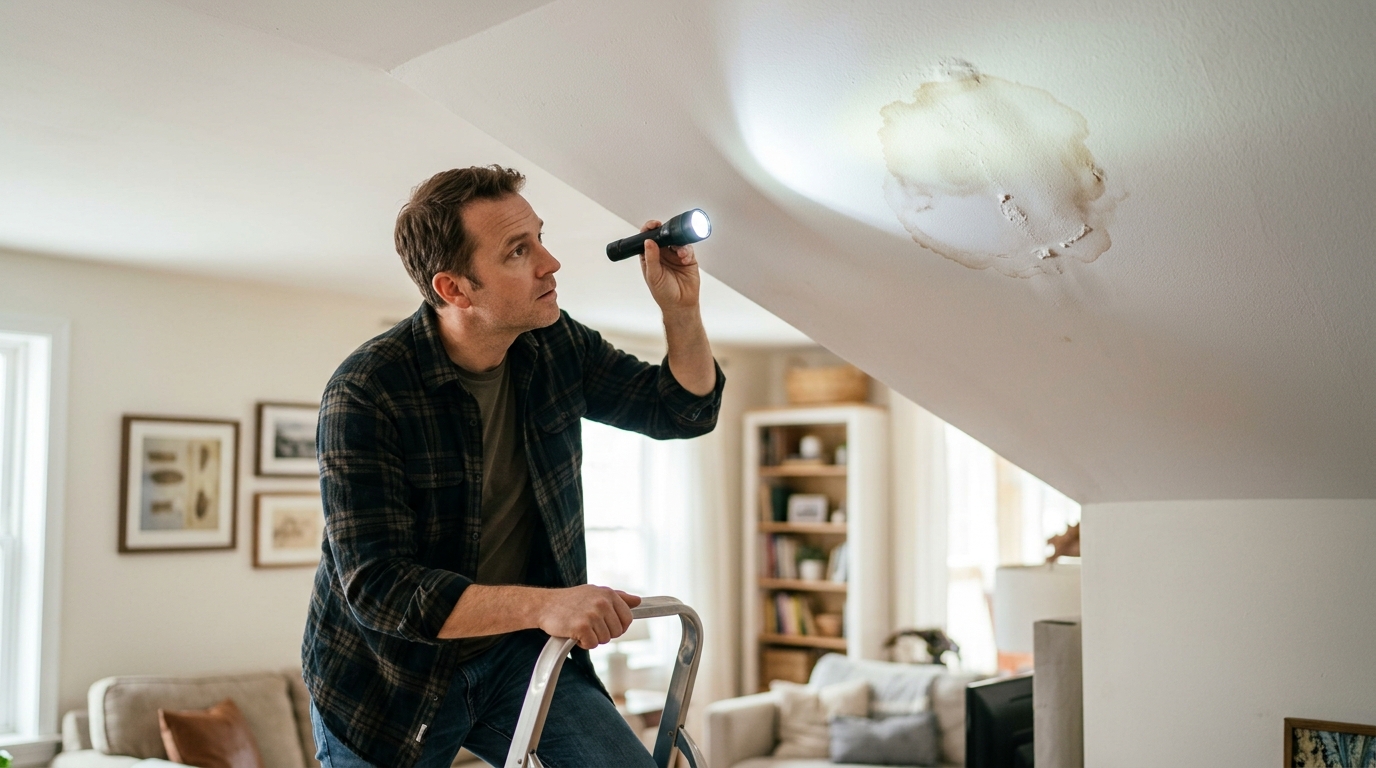
- Yellow or brown ceiling stains, often with darker rings around the edges
- Bubbling, peeling, or sagging paint and drywall
- A musty smell in a closet, hallway, or upper room
- Mold or mildew spots on walls or ceilings
- Granules from shingles collecting in gutters
- Daylight visible through the attic boards
Stains that grow after rain point to an active leak. Stains that stay the same size may be old, but they still deserve a look.
How to Find Roof Leak Source: A Practical Walkthrough
Finding the roof leak source mostly means working backward from the stain. Water travels along rafters, pipes, and wires before it drops, so the wet spot inside is usually downhill from the real entry point.
· Step One: Mark the Interior Damage
Note the exact location of every stain, and measure the distance from the nearest wall. Take photos. This gives you a map to compare with what you find above.
· Step Two: Inspect the Roof Surface Safely
Stay on the ground if the roof is steep or wet. Binoculars work well for spotting cracked shingles, exposed nails, and damaged flashing. Ladder falls cause serious injuries every year, so follow the ladder safety guidance from NIOSH listed in the references below.
· Step Three: Look Uphill From the Stain
Draw an imaginary line up the roof from the interior stain. Check penetrations first, such as vent pipes, chimneys, and skylights, because these are the leading suspects.
Tracing Roof Leaks Inside Attic
The attic is where tracing roof leakspays off. It is also where the evidence is easiest to find, since the underside of the roof deck tells the story.
· What to Look For
Grab a bright flashlight and head up on a dry day. Look for dark stains on the rafters, wet or compressed insulation, rusty nail tips, and mold on the wood. Follow any streaks to their highest point, because that is usually near the entry spot.
· Check Around Penetrations
Examine the areas around plumbing vents, exhaust fans, and the chimney. Condensation from poor ventilation can also mimic a leak, so notice whether the moisture shows up mostly in cold weather instead of after storms.
· Try a Simple Hose Test
With a helper, run a garden hose over small roof sections, starting at the lowest point and working upward. Wait several minutes in each area while the helper watches the attic. When drips appear, the last section wetted is the likely culprit.
Symptoms and Likely Causes at a Glance
A roof water leak diagnosis is easier when you match symptoms with likely causes. Use this chart as a starting point.
| What You Notice | Likely Cause | Where to Check First |
| Stain near a chimney or vent | Failed flashing or sealant | Base of the penetration |
| Stain along an exterior wall | Clogged gutter or damaged roof edge | Gutters and eaves |
| Drips only after heavy wind and rain | Lifted or missing shingles | Roof surface above the stain |
| Damp attic in winter, no storm | Condensation or poor ventilation | Attic vents and insulation |
| Stain in a valley area | Worn valley flashing | Roof valleys |
Remember that this chart shows probabilities, not guarantees. Water can take strange paths.
Temporary Fixes While You Figure It Out
Active leaks need quick control. Place a bucket under the drip, move furniture, and poke a small hole in a bulging ceiling bubble to release trapped water safely into a container. A tarp secured over a known damaged area can buy time, but it should be a short-term solution only.
Once the source is found, the next question is cost. Unsure about roof repair vs replacement? Impact Exteriors offers thorough, honest inspections that show which option fits the age and condition of your roof, so every dollar goes where it counts.
When It Is Time to Stop the DIY Investigation
Some situations call for a professional right away. Call a roofer when:
- The roof is steep, very high, or slick
- Multiple leaks appear at once
- The decking feels soft or spongy
- Mold covers a large area
- The source remains a mystery after the attic and hose checks
A roofer can use moisture meters and thermal imaging to find hidden moisture, and your notes and photos will speed up the inspection. Skipping the guesswork means fewer repeat visits and a more accurate quote.
Frequently Asked Questions
How can I tell if a ceiling stain is from an active roof leak?
Active leaks produce stains that feel damp, grow after rain, and often show darker rings. Dry, unchanging stains usually indicate an older leak that has since stopped.
Can a roof leak start far from where the water drips inside?
Yes. Water follows rafters, pipes, and insulation before dripping, so the interior wet spot is often several feet downhill from the actual roof opening.
Is it safe to climb on the roof to look for a leak?
Usually not. Steep, wet, or high roofs cause serious falls. Binoculars from the ground and an attic inspection are safer ways to start searching.
Conclusion
A leaking roof does not have to be a mystery. Start with the interior stains, study the roof leak signs and symptoms, climb into the attic for some careful tracing, and match what you see with the chart above. Even if the source stays hidden, the information gathered makes the next conversation with a roofer far more productive. Acting quickly matters most, because small leaks grow into rotted framing, ruined insulation, and mold problems.
Still unsure where the water is getting in? Impact Exteriors can trace the source quickly and fix it right. Contact us today for dependable roof leak repair services that stop the damage before it spreads.