
Summary:
Gutter guards reduce debris buildup and help maintain drainage, but performance depends on design, roof configuration, nearby trees, and local weather. Micro-mesh, reverse-curve, and foam systems differ in filtration, durability, installation, and upkeep. Choosing a suitable option for a DMV home can help limit clogs and moisture-related damage.
Gutters carry rain away from your roof, walls, and home’s base. But leaves, pine needles, and other debris can clog them, especially in fall and during heavy rain across Washington, DC, Maryland, and Northern Virginia (DMV). Gutter guards can reduce debris entering the system, but their performance varies by design.
Understanding micro-mesh, reverse-curve, and foam guards helps you choose a system suited to your roof, surrounding trees, rainfall exposure, and maintenance needs.
What Are the Best Gutter Guard Types Compared?
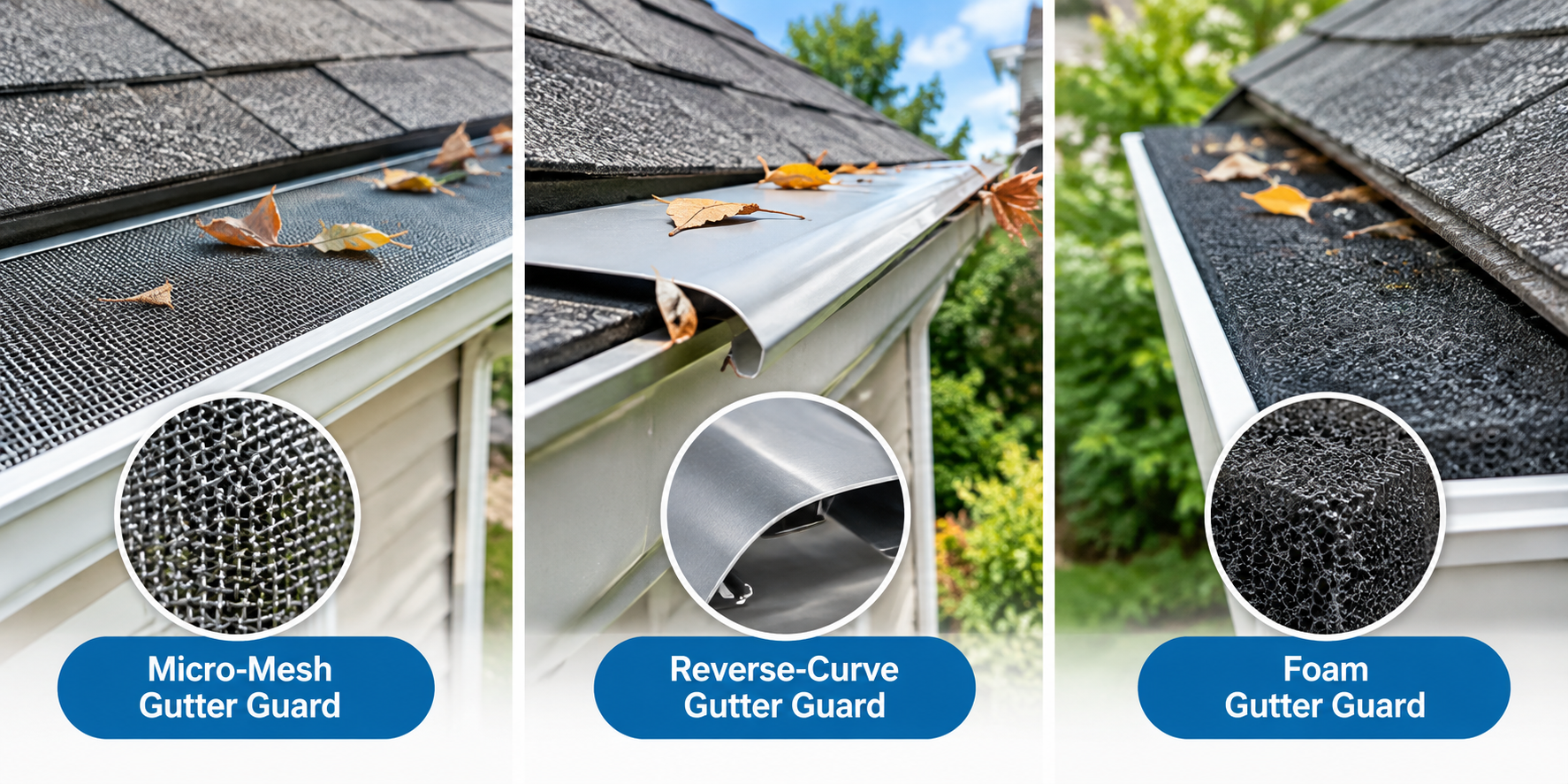
The best gutter guard types compared include micro-mesh, reverse-curve, and foam systems. Each handles debris differently, so consider the vegetation around your property and how often your gutters clog.
1. Micro-Mesh Gutter Guards
Micro-mesh guards use a fine screen, often made from stainless steel or another corrosion-resistant material. Water passes through while leaves and many smaller particles remain on the surface.
Advantages: Fine mesh can block pine needles and small leaves. Durable metal products can last a long time when installed and maintained properly.
Disadvantages: Pollen, roof grit, and fine debris can collect on the screen. Product quality and water-entry capacity vary.
Micro-mesh can suit DMV homes with mature trees, provided the selected product accommodates the roof’s runoff.
2. Reverse-Curve Gutter Guards
Reverse-curve guards use a curved cover to direct water into a narrow gutter opening. Surface tension helps water follow the curve, while larger debris is intended to fall away.
Advantages: Much of the debris stays outside the gutter, reducing what collects inside. Solid covers can also be durable.
Disadvantages: Incorrect installation angles and heavy rainfall can cause water to overshoot the opening. Fine debris may enter, and some designs are more visible from the ground.
Ask whether the product can handle intense DMV thunderstorms and your roof’s drainage requirements.
3. Foam Gutter Guards
Foam guards sit inside the gutter. Their porous structure lets water through while blocking larger debris.
Advantages: Foam inserts are relatively easy to install in compatible gutters and may cost less upfront than more elaborate systems.
Disadvantages: Foam can trap fine debris and retain moisture. Sun exposure, temperature changes, and prolonged wet conditions may contribute to deterioration, depending on the material.
The pros and cons of foam gutter guards deserve careful consideration. Low initial cost may not offset frequent cleaning or replacement.
Micro-Mesh vs Reverse-Curve vs Foam: Quick Comparison
| Feature | Micro-Mesh | Reverse-Curve | Foam |
| How it works | Filters debris through fine mesh | Directs water along a curved cover | Allows water through a porous insert |
| Fine debris | Generally handles it well, but can clog | Some fine particles may enter | Fine material can collect in the foam |
| Large leaves | Usually blocks them | Designed to shed them | Blocks many leaves but can collect debris |
| Installation | Depends on product and roof design | Often requires precise fitting | Generally simple for compatible gutters |
| Long-term upkeep | Surface cleaning and inspection | Cleaning and opening inspection | Regular checks and possible replacement |
| Main concern | Mesh blockage or material quality | Water overshooting the opening | Deterioration and trapped debris |
Performance depends on product quality, installation, gutter condition, and weather. No guard guarantees completely debris-free gutters.
How to Choose a Gutter Guard for a DMV Home
Here’s how to choose a gutter guard for your home.
Consider the Trees Around Your Property
Pine needles, broad leaves, seed pods, and roof granules create different maintenance challenges. Micro-mesh may suit homes surrounded by evergreens, while reverse-curve designs may be suitable where larger leaves dominate. Foam requires particular attention when fine debris is common.
Account for Heavy Rainfall
The DMV experiences thunderstorms and periods of heavy rain. Guards must allow sufficient water into the gutter to prevent overflow. A restricted or clogged entry point can interfere with drainage during intense rainfall.
Ask an installer to assess roof runoff, gutter capacity, slope, and downspout placement before recommending a product.
Check Existing Gutter Condition
Guards cannot correct sagging gutters, loose fasteners, poor slope, or blocked downspouts. Address these problems before installation so the new system does not conceal existing drainage defects.
Review Material and Installation Quality
Check material durability, corrosion resistance, fastening methods, roof compatibility, and warranty conditions. Ask about maintenance requirements and exclusions related to improper installation.
Consider Long-Term Maintenance
The purchase price is only one consideration. Factor in surface cleaning, inspections, access requirements, and how easily a guard can be removed if a blockage develops.
Impact Exteriors can assess your roofline and drainage needs before recommending suitable gutter guard installation options for your DMV home.
Do Gutter Guards Really Work?
The answer is practical: they can reduce debris entering gutters, but effectiveness depends on the product and installation.
A suitable guard may reduce how often you need to clean and help maintain water flow. However, debris can accumulate on the surface, fine particles may pass through, and downspouts can still become blocked. Guards cannot prevent every type of water damage caused by roof leaks or poor drainage.
Treat gutter guards as a maintenance aid, not a replacement for inspections and cleaning.
Gutter Protection Maintenance Tips for Lasting Performance
Follow these tips to keep your drainage system working effectively.
Inspect Gutters Seasonally
Check gutters in spring and fall and after significant storms. Look for debris, loose panels, sagging sections, and water marks beneath the roofline. Arrange professional inspections when damage is difficult to assess safely.
Keep Guard Surfaces Clear
Remove accumulated leaves and debris as needed. Fine mesh can collect pollen and roof grit, while reverse-curve covers may require cleaning around their water-entry openings.
Check Downspouts and Water Discharge
Make sure downspouts carry water away from the foundation. A clear gutter cannot protect your home effectively if a downspout is blocked or discharges water too close to the building.
Arrange Repairs When Needed
Loose guards, separated joints, corrosion, and persistent overflow require attention. Avoid climbing ladders or walking on roofs without suitable training and safety equipment.
FAQs
Which gutter guard type is best for homes with pine trees?
Micro-mesh is often suitable because its fine openings can block many pine needles. However, pollen and fine debris can collect on the surface, so periodic cleaning remains necessary.
Do foam gutter guards hold up over the long term?
They may suit certain homes and budgets, but foam can retain debris and deteriorate. Inspect inserts regularly and replace them if they clog, get damaged, or stop working.
Can reverse-curve guards handle heavy rain?
Performance depends on design, installation angle, and roof runoff. Some systems struggle when water reaches the gutter faster than it can enter the opening, so confirm suitability for local rainfall.
Do gutter guards eliminate gutter cleaning?
No. They reduce debris entry but do not eliminate surface buildup, downspout blockages, or the need to inspect the drainage system.
Can you install gutter guards on existing gutters?
Many systems fit existing gutters if they are structurally sound and compatible with the product. Damaged, undersized, or poorly aligned gutters may need repairs first.
Final Thoughts
When comparing micro mesh vs reverse curve gutter guards, consider how each system handles debris, rainfall, and different roof designs. Micro-mesh, reverse-curve, and foam guards offer distinct benefits, so the best choice depends on durability, upkeep, and local conditions.
For DMV homeowners, selecting a compatible system and maintaining gutters and downspouts can help reduce blockages and protect the home’s exterior. A professional assessment can identify drainage problems before installation.
Impact Exteriors can help evaluate your home’s gutter condition and discuss compatible seamless gutter systems for dependable roof drainage.