
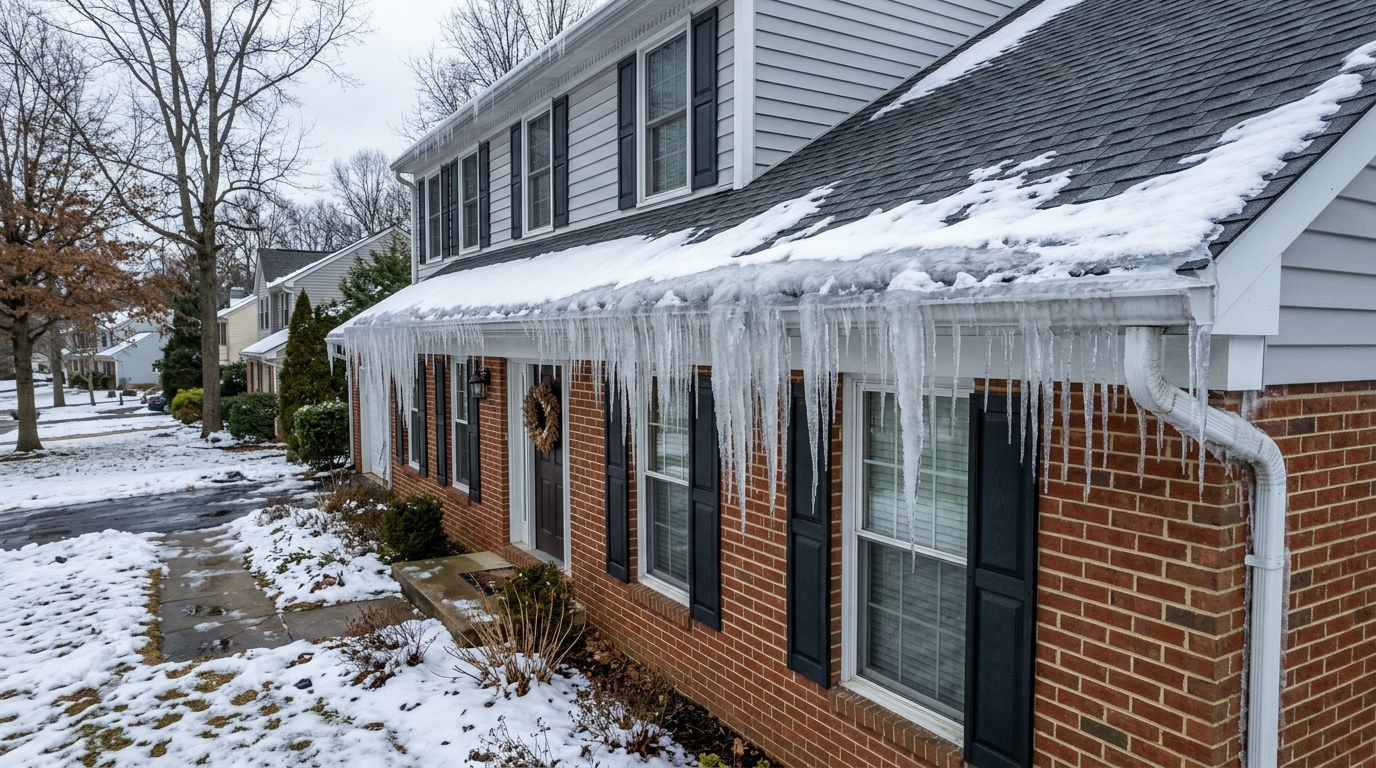
Summary:
Ice dams in Northern Virginia form when attic heat melts roof snow, and meltwater refreezes at the cold eaves. The resulting ridges force water under shingles, damaging insulation, decking, ceilings, and gutters. Sealing air leaks, improving insulation and ventilation, clearing gutters, and adding ice and water shield prevent most problems before winter arrives.
Northern Virginia winters swing between snowstorms, bright afternoons, and freezing nights. That back-and-forth is exactly what ice dams love. A ridge of ice forms along the roof edge, meltwater gets trapped behind it, and suddenly water is finding its way into the home. The result can be stained ceilings, soaked insulation, and costly repairs. Understanding how the process works and which warning signs to watch for makes it much easier to stop before real damage begins.
What Causes Ice Dams on Roof in Northern Virginia?
Ice dams on a roof come down to three ingredients working together.
· Heat Escaping Into the Attic
Warm air leaks from living spaces through gaps around light fixtures, attic hatches, and ductwork. That heat warms the roof deck from below and melts the snow sitting on top.
· Snow Cover That Acts Like a Blanket
A layer of snow insulates the roof, which holds the heat in and speeds up melting. The upper roof warms up while the eaves stay cold.
· Freeze and Thaw Swings
Meltwater runs down the slope until it reaches the cold overhang, where it refreezes. Layer after layer builds into a dam. Northern Virginia sees plenty of days above freezing followed by nights below it, so the cycle repeats often.
Signs of Roof Ice Damming You Can Spot Early
Catching the signsquickly can prevent a repair bill later. Look for these clues:
- Thick ridges of ice along the eaves or in gutters
- Long icicles hanging from the roofline
- Water stains on ceilings or along exterior walls
- Bubbling or peeling paint near the top of walls
- Damp, matted insulation in the attic
- Frost patches on the underside of the roof deck
Uneven snow melt is another giveaway. If one part of the roof is bare while the rest stays buried, heat is probably escaping from the attic below that spot.
The Real Cost of Ice and the Damage It Can Cause
Ice dams are more than a cosmetic problem. Once water backs up under shingles, the harm spreads quietly.
· Soaked Insulation and Stained Ceilings
Wet insulation loses much of its ability to slow heat flow, which makes the dam problem worse. Water that reaches the ceiling leaves stains and can loosen drywall.
· Rotted Decking and Lifted Shingles
Repeated soaking weakens roof sheathing over time. Expanding ice can also pry shingles upward and crack the seals that keep rain out.
· Mold and Gutter Trouble
Trapped moisture in attics and walls invites mold. Heavy ice can also pull gutters away from the fascia, leaving the edge of the roof unprotected.
Preparation before the first freeze makes a big difference. Impact Exteriors offers professional winter roof maintenance that checks flashing, shingles, gutters, and attic conditions so small weak spots get fixed before snow arrives. Schedule your inspection with Impact Exteriors today and head into the cold season with confidence.
Ice Dam Prevention Methods Before Winter Hits
The most effective ways to prevent ice dams focus on keeping the roof surface evenly cold.
· Seal the Air Leaks First
Use caulk or spray foam around wiring, plumbing pipes, and recessed lights. Weatherstrip the attic hatch. Stopping warm air from rising is the single most effective step.
· Improve Attic Ventilation
Soffit and ridge vents pull cold outdoor air through the attic and flush out warmth. Ensure that insulation is not blocking the soffit vents.
· Keep the Roof and Gutters Clear
A roof rake with a long handle removes snow from the lowest few feet of the roof while standing safely on the ground. Cleaning gutters in fall lets meltwater drain instead of freezing in place.
· Consider Ice and Water Shield
Self-adhering waterproof membrane installed under shingles along the eaves adds a backup layer. It does not stop dams from forming, but it helps keep water out when they do.
Simple Ways to Improve Attic Comfort During Cold Weather
Good winter roof attic insulation tips start with air sealing, since insulation works best on a tight surface.
- Aim for the depth recommended for the region. Many guidelines for this climate point to about R-49 or higher, so check current local code requirements.
- Keep insulation evenly spread, especially over exterior walls where it tends to thin out.
- Leave a clear channel at the eaves so air can flow from the soffit vents.
- Insulate and seal attic ductwork, since leaky ducts push heated air straight into the attic.
- Replace insulation that has been wet or compacted.
Common Problems and How to Address Them
| Problem | What Happens | Best Fix |
| Air leaks into the attic | Roof deck warms and snow melts | Seal gaps with caulk or foam |
| Thin or uneven insulation | Heat reaches the roof surface | Add insulation to recommended depth |
| Blocked soffit vents | Attic stays warm | Install baffles and clear vents |
| Clogged gutters | Meltwater refreezes at the edge | Clean gutters before winter |
| Heavy snow on lower roof | Extra insulation effect, faster melting | Use a roof rake from the ground |
Frequently Asked Questions
- How do ice dams damage roofs?
Understanding how ice dams damage roofs helps explain why quick action matters. Trapped water seeps under shingles, soaks decking and insulation, and can lead to leaks, rot, and mold.
- Is it safe to chip ice off the roof?
Chipping or using sharp tools usually harms shingles and risks falls. Removing snow with a roof rake and calling a professional for existing dams is a safer approach.
- Can ice dams form on a newer roof?
Yes. Dams depend on attic heat, snow, and temperature swings, not roof age. A new roof with poor insulation or ventilation can still develop them.
Conclusion
Ice dams in Northern Virginia come from a simple chain of events: attic heat, snow cover, and repeated freezing. Spotting the warning signs, sealing air leaks, improving insulation and ventilation, and keeping gutters clear can stop most problems before they start. A little attention in fall saves a lot of stress when the first big storm rolls in.
Ice dams are easier to prevent than repair. Impact Exteriors helps Northern Virginia homeowners keep roofs, gutters, and attics ready for every season. Read our seasonal exterior care guide to keep your roof, gutters, and attic ready for every season, and schedule a visit today to keep your home safe from winter damage.