
Summary:
Soffit and fascia protect the roofline, support attic ventilation, and help manage moisture around a home’s exterior. In the DMV region, rainfall, humidity, seasonal temperature changes, and gutter problems can contribute to deterioration. Recognizing rot early and replacing damaged materials when necessary can help prevent more extensive roofline damage.
Soffit and fascia are easy to overlook during routine maintenance, yet both help protect your roofline. Rainwater intrusion, overflowing gutters, and ventilation problems can cause deterioration over time. By the time peeling paint or soft wood becomes visible, moisture may have affected surrounding materials.
For homeowners in Washington, DC, Maryland, and Northern Virginia (DMV), regular inspections can help identify problems early. Knowing how soffit and fascia differ, spotting signs of damage, and understanding when they need replacing can help safeguard your home.
What Is the Difference Between Soffit and Fascia?
The difference between soffit and fascia comes down to location and function. Both sit around the roof’s edges, but they protect different areas.
What Does a Soffit Do?
The soffit is the underside of a roof overhang; vents may let outside air into the attic. This airflow helps manage heat and moisture when combined with suitable exhaust ventilation. Soffits cover exposed roof supports and help keep pests out. They are often made of vinyl, aluminum, wood, or fiber cement.
What Does a Fascia Board Do?
The fascia is the strip of wood along the roof’s lower edge. It makes the roof look finished, hides the rafter ends, and usually supports the gutters. Because gutters attach to or near fascia boards, leaking joints and overflowing water can keep them wet for long periods. Deteriorated fascia may also struggle to hold gutter fasteners securely.
Signs of Rotted Soffit and Fascia
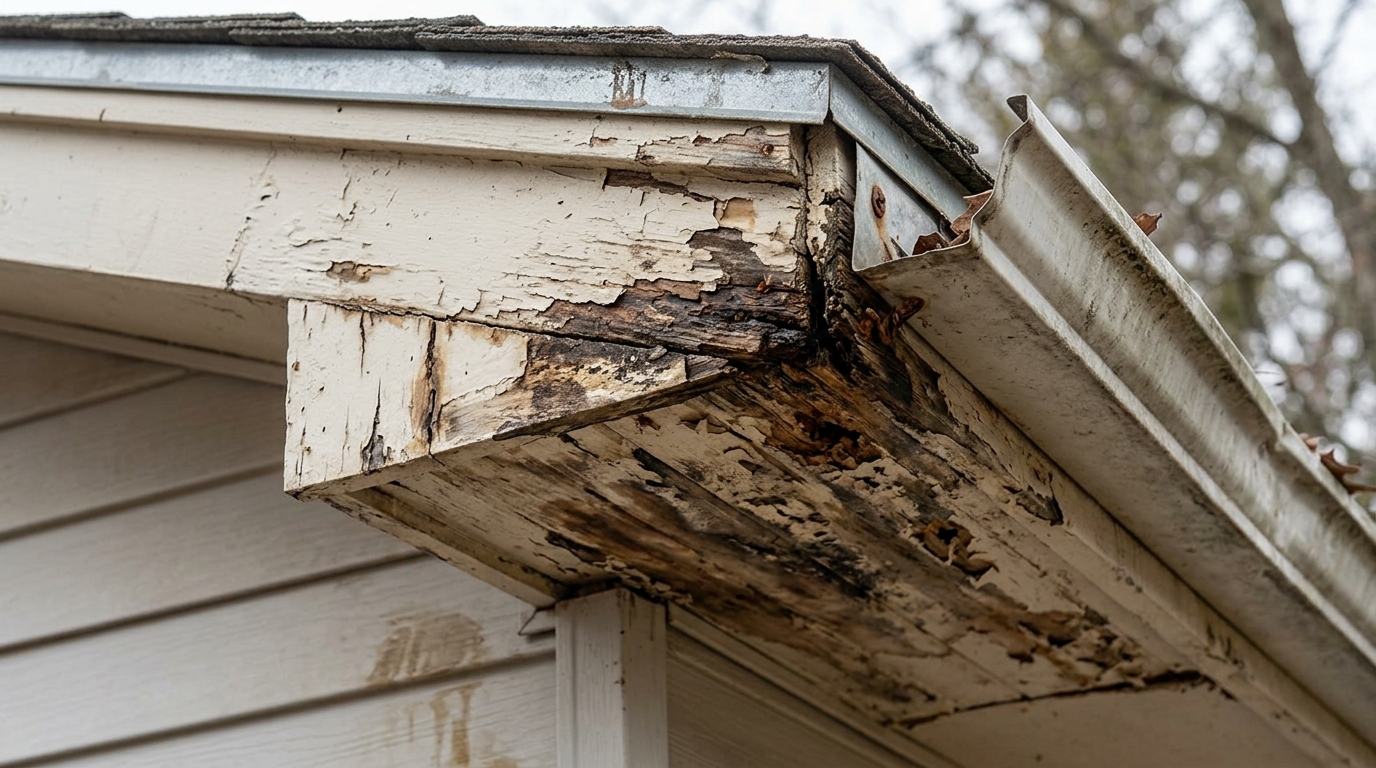
Signs of rotted soffit and fascia can start as cosmetic changes before progressing to more serious deterioration. Inspect visible roofline areas periodically, especially after heavy rain or gutter problems.
1. Peeling, Bubbling, or Cracked Paint
Paint that repeatedly peels, blisters, or cracks may indicate moisture beneath the finish. Water can enter through damaged paint, open joints, or nearby roofing components.
Repainting alone will not solve active moisture intrusion. First, identify the source and check the underlying material.
2. Soft, Swollen, or Crumbling Wood
Wood that feels soft, swells, or breaks apart easily may have started to decay. Damaged fascia can no longer hold gutter fasteners securely. A professional can safely assess concealed deterioration, especially when roof access is required.
3. Dark Stains and Persistent Discoloration
Brown or black marks may indicate repeated moisture exposure. Possible causes include overflowing gutters, roof leaks, damaged flashing, and leaking joints. Stains alone do not confirm rot, but recurring discoloration deserves investigation, especially when the surface remains damp.
4. Sagging or Separating Panels
Soffit panels that bow, loosen, or pull away from the roofline may have damaged fasteners or deteriorated supporting materials. Gaps can expose the roof cavity to rain and pests. Arrange an inspection if panels separate after storms or appear alongside gutter damage.
5. Mold, Mildew, or Musty Odors
Persistent moisture can encourage mold or mildew growth. Visible growth near the eaves may indicate a leak, condensation, or inadequate ventilation. Surface growth does not automatically mean the material underneath has rotted. Check for active moisture and damage to hidden materials.
6. Pest Activity Near the Roofline
Birds, insects, and small animals may enter through damaged panels or gaps beneath the eaves. Nesting material can also obstruct ventilation openings.
Repairs should close appropriate entry points while preserving the ventilation required by the roof design.
What Causes Fascia Board Rot?
Understanding what causes fascia board rot helps prevent recurring damage after repairs.
Overflowing or Leaking Gutters
Leaves and debris clog gutters and downspouts, causing overflow; loose joints can repeatedly wet fascia boards.
Roof Leaks and Damaged Flashing
Damaged shingles, compromised flashing, and poorly sealed roof details can let water reach the fascia, soffit, and nearby framing.
Poor Ventilation and Condensation
Poor attic ventilation and bathroom or kitchen exhaust vented into the attic can cause moisture buildup. Assess ventilation alongside insulation, air sealing, and exhaust ducts.
Deteriorated Finishes and Exposed Joints
Cracked paint, failed sealant, and open joints let water enter. Repeated wetting increases the risk of wood decay, especially when it cannot dry.
How Soffit Ventilation Works
Soffit vents typically provide intake airflow near the roof’s lower edge. In a compatible attic ventilation system, air enters through these openings and exits through suitable higher exhaust vents. This arrangement helps manage attic heat and moisture.
Effective ventilation requires unobstructed openings and a well-designed system. Insulation should not block soffit vents, and adding vents without assessing existing exhaust openings may not resolve the problem. Requirements depend on roof design, attic configuration, and applicable building codes.
For DMV homes, seasonal humidity and temperature changes make moisture management important. However, ventilation alone cannot correct roof leaks, gutter overflow, or air leaks from living spaces.
Repair or Replacement: Which Is Appropriate?
Knowing when to replace damaged fascia depends on the extent of deterioration, the material’s condition, and the underlying moisture source.
| Condition | Potential response |
| Minor paint damage with sound material | Prepare the surface, address moisture, and repaint |
| Small, localized damage | Repair or replace the affected section if surrounding material is sound |
| Extensive wood rot or crumbling boards | Replace deteriorated material |
| Loose gutters caused by damaged fascia | Assess the board and gutter attachment before refastening |
| Repeated moisture damage | Correct the underlying leak, drainage, or ventilation issue |
| Damaged soffit panels with exposed openings | Repair or replace panels and restore appropriate ventilation |
When Repair May Be Enough
A localized repair may be suitable when damage is limited, and surrounding materials remain sound. The contractor should address the moisture source, repair or replace compromised material, and restore the protective finish.
When Replacement Is the Better Option
Replacement is generally appropriate when decay is widespread, boards have lost strength, fasteners no longer hold securely, or damage extends into supporting components. Replacing deteriorated sections also allows concealed roof edges to be inspected.
Wood, vinyl, aluminum, and fiber cement require different installation and maintenance. Choose materials compatible with the existing roofline and preserve required ventilation openings.
Impact Exteriors can help assess roofline deterioration and recommend appropriate soffit and fascia repair solutions for your DMV home.
How to Prevent Future Soffit and Fascia Damage
Prevention starts with controlling moisture and maintaining the roofline. Inspect gutters and downspouts regularly, remove debris, and address leaks before water repeatedly reaches the fascia. Look for peeling paint, open joints, loose panels, and recurring stains.
Keep soffit vents clear and ensure exhaust fans discharge outdoors through suitable ductwork. After significant storms, check for visible gutter separation, displaced roofing materials, and new water marks.
Also watch for failing gutter warning signs, including sagging sections, leaking joints, persistent overflow, and loose brackets. These problems can expose fascia boards to repeated moisture. Arrange professional inspections when damage is difficult to assess from the ground.
FAQs
How can I tell if my soffit or fascia is rotting?
Look for soft or crumbling wood, peeling paint, persistent water stains, swollen sections, and loose panels. These signs warrant an inspection, but a professional assessment is needed to confirm the extent of decay.
Can rotted fascia cause gutter problems?
Yes. Deteriorated fascia may not hold gutter fasteners securely, which can cause gutters to sag or detach. The gutter system and the supporting material should be assessed together.
Do you need to replace both the soffit and fascia at the same time?
Not always. If damage is limited to one component and the surrounding materials remain sound, a targeted repair or replacement may be sufficient. Both should be inspected to identify related moisture problems.
Does soffit damage affect attic ventilation?
It can. Damaged, blocked, or incorrectly repaired soffit vents may restrict intended intake airflow. Repairs should restore the ventilation openings required by the roof’s design.
Can new paint prevent fascia rot?
Paint can protect sound wood when applied correctly, but it cannot repair existing decay or stop an unresolved leak. Address moisture intrusion and replace unsound material before repainting.
Final Thoughts
Soffit and fascia damage is more than cosmetic. Peeling paint, soft wood, recurring stains, loose panels, and gutter separation can signal moisture problems that need attention. For DMV homeowners, regular inspections and timely repairs can help protect the roofline, maintain attic ventilation, and reduce further deterioration. Effective repairs address both damaged materials and the underlying cause.
Contact Impact Exteriors to discuss roofline concerns and get guidance on addressing signs of failing gutters before further moisture damage develops.