
Summary:
Beneath shingles, a roof relies on the deck, underlayment, and ice and water shield to block moisture that shingles alone cannot stop. Synthetic underlayment resists tearing, while felt costs less. Self-adhering membrane protects eaves, valleys, and penetrations. Proper selection, placement, and installation prevent leaks, rot, and costly repairs over a roof’s lifespan.
Most homeowners think of shingles when they think about a roof. Shingles do the visible work, but the real protection often hides underneath. A few thin layers decide how well a roof handles wind-driven rain, melting snow, and years of weather. This roof waterproof barrier guide breaks down what sits beneath the surface, making it far easier to judge a repair quote or a replacement plan.
Roof Underlayment Layers Explained: From Deck to Shingle
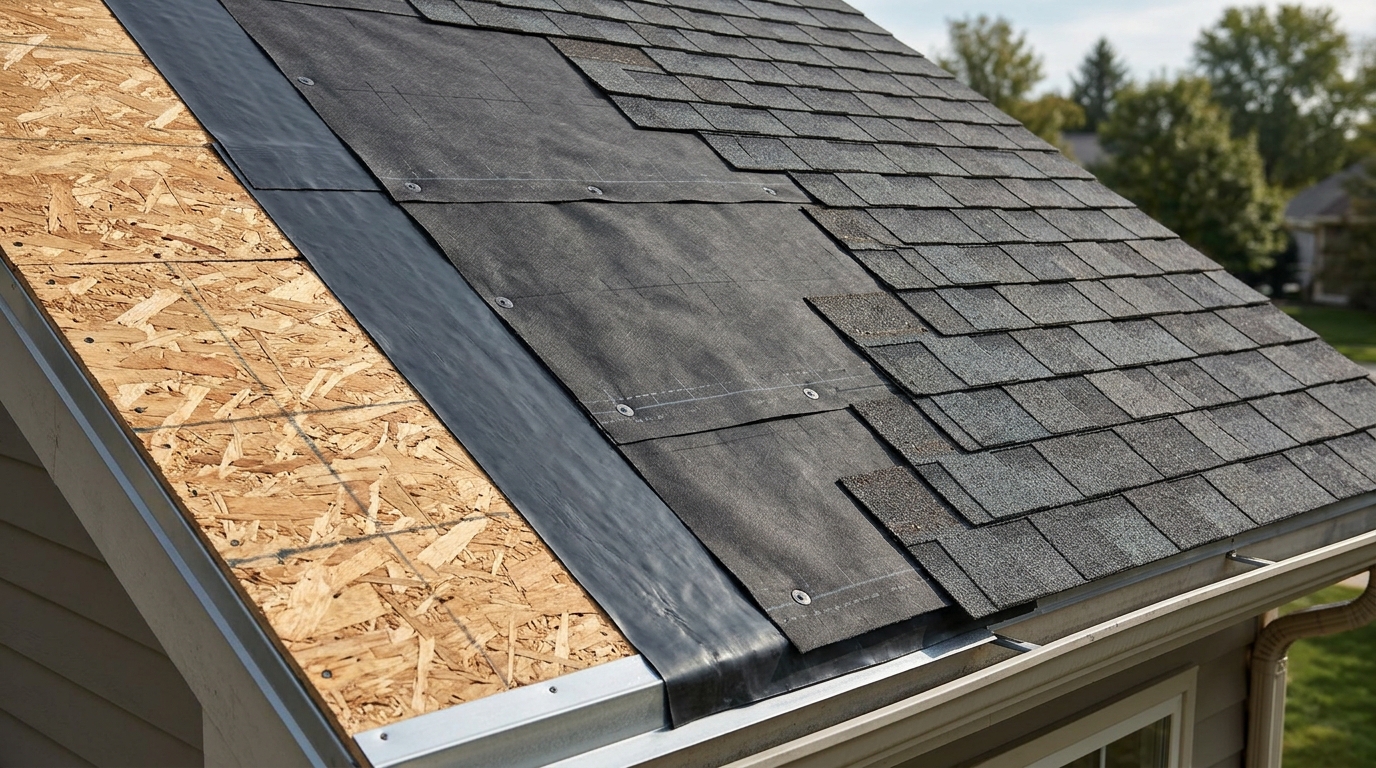
A typical roof is built like a sandwich, and each layer has a job.
· The Deck at the Bottom
The deck is the structural base, usually plywood or oriented strand board nailed to the rafters. Everything else rests on it.
· The Underlayment in the Middle
Underlayment is a thin sheet rolled across the deck before shingles go on. It acts as a second line of defense when water sneaks past the surface.
· The Shingles on Top
Shingles shed most of the rain, but they are not truly waterproof. Wind can lift them, nail holes create tiny openings, and seams can let moisture creep in.
Why Shingles Cannot Do the Job Alone
The purpose of roof decking underlayment is to protect the wood deck and the home below from moisture that gets past the shingles. It does several things at once:
- Blocks wind-driven rain from reaching the wood
- Gives a smooth, protected surface during installation
- Shields the deck if shingles blow off during a storm
- Helps keep the deck dry and stable, which prevents rot
Without it, a single cracked shingle can mean a soaked deck. With it, that same crack is usually a minor annoyance.
Which Roofing Material Offers Better Protection?
Choosing between synthetic vs felt roof underlayment is one of the biggest decisions in this part of the project. Both work, but they behave differently.
· Felt Underlayment
Felt, often called tar paper, is made from paper or fiber mats soaked in asphalt. It comes in common weights such as 15-pound and 30-pound, with the heavier one being thicker and more durable. Felt costs less, but it can tear, wrinkle when wet, and break down if left exposed for long.
· Synthetic Underlayment
Synthetic sheets are made from polypropylene or polyester. They are lighter, resist tearing, and lie flat on the deck. Many products also handle sun exposure better during a long installation, which matters when weather delays a job.
Which One Makes Sense?
Synthetic usually costs more up front but offers stronger protection and easier handling. Felt remains a reasonable choice on a tight budget, as long as the roof is covered promptly. Manufacturer instructions and shingle warranty terms should guide the final pick.
| Feature | Felt Underlayment | Synthetic Underlayment |
| Material | Asphalt-soaked paper or fiber | Polypropylene or polyester |
| Weight | Heavier | Lighter |
| Tear resistance | Moderate | High |
| Exposure before shingling | Short | Longer, per manufacturer |
| Behavior when wet | Can wrinkle and buckle | Stays flat |
| Cost | Lower | Higher |
What Is Ice and Water Shield?
Many homeowners ask what ice and water shield is the first time it shows up on an estimate. It is a self-adhering waterproof membrane, usually made of rubberized asphalt, that sticks directly to the roof deck. Unlike standard underlayment, it seals around nails driven through it, which makes it especially good at stopping leaks.
· How It Works
The peel-and-stick backing bonds tightly to the wood. When a nail pierces the membrane, the material hugs the nail shaft and blocks water from following it down.
· Where It Belongs
The most common spots are the eaves, valleys, and areas around chimneys, skylights, and vent pipes. In cold climates, building codes often require it along the lower edge of the roof, extending past the exterior wall line. In snowy regions, that protection helps when ice dams push meltwater up under shingles. Local code rules vary, so the building department has the final word.
· When It Is Worth the Extra Cost
Membrane costs more than felt or synthetic sheets, so covering the entire roof is not always necessary. Using it on vulnerable areas gives strong protection without a huge price jump. Roofs with low slopes or complex shapes may benefit from wider coverage.
Choosing the right underlayment is essential for long-lasting roof protection. As an experienced roof replacement contractor, Impact Exteriors helps homeowners choose roofing materials based on their home’s needs, local climate, and budget. Contact Impact Exteriors today to schedule your free consultation.
How to Choose the Right Waterproofing for Your Roof
Use this checklist when planning a new roof or reviewing a contractor’s proposal:
- Ask which underlayment type is planned and why
- Confirm where the ice and water membrane will be installed
- Check that the products are approved for the chosen shingles
- Make sure the deck is dry and clean before anything goes down
- Look for proper overlaps, with upper sheets lapping over lower ones
- Ask how long the underlayment can stay exposed before shingles are installed
Each layer only works if it is installed correctly. Wrinkles, gaps, and missed corners can undo the benefits of premium materials.
Frequently Asked Questions
- Is underlayment really necessary under shingles?
Yes. Shingles are not fully waterproof, so underlayment adds a second barrier that protects the deck from wind-driven rain and leaks.
- Which lasts longer, synthetic or felt underlayment?
Synthetic usually lasts longer because it resists tearing, wrinkling, and sun exposure better than felt, especially during long installations.
- Does ice and water shield go on the entire roof?
Not always. It is most often installed at eaves, valleys, and penetrations, though low-slope or complex roofs may benefit from wider coverage.
- Can ice and water shield stop ice dams?
It cannot prevent dams from forming, but it seals around nails and helps keep meltwater from leaking into the home when dams occur.
- How can a homeowner tell what underlayment a roof has?
It is hard to see once shingles are installed. Roofing invoices, warranty paperwork, or a contractor’s inspection usually reveal the type used.
Conclusion
Shingles get the attention, but the layers below keep water out of the house. The deck gives structure, underlayment adds a second barrier, and ice and water membrane guards the most leak-prone spots. Comparing synthetic and felt options, knowing where membrane belongs, and asking smart questions during an estimate can save thousands in future repairs. A well-built roof is only as strong as the parts nobody sees.
Ready to choose the right materials with confidence? Read our best roofing materials guide to compare options, then connect with Impact Exteriors today for honest advice and quality installation that protects your home from the deck up.