
Summary:
When a tree falls on a roof, safety comes first: get everyone out, avoid downed power lines, and call 911 when needed. Next, document the damage, cover openings with a tarp, hire licensed removal pros, and contact the insurer. Standard homeowners insurance usually covers tree damage to the home, and a professional inspection checks for hidden structural problems.
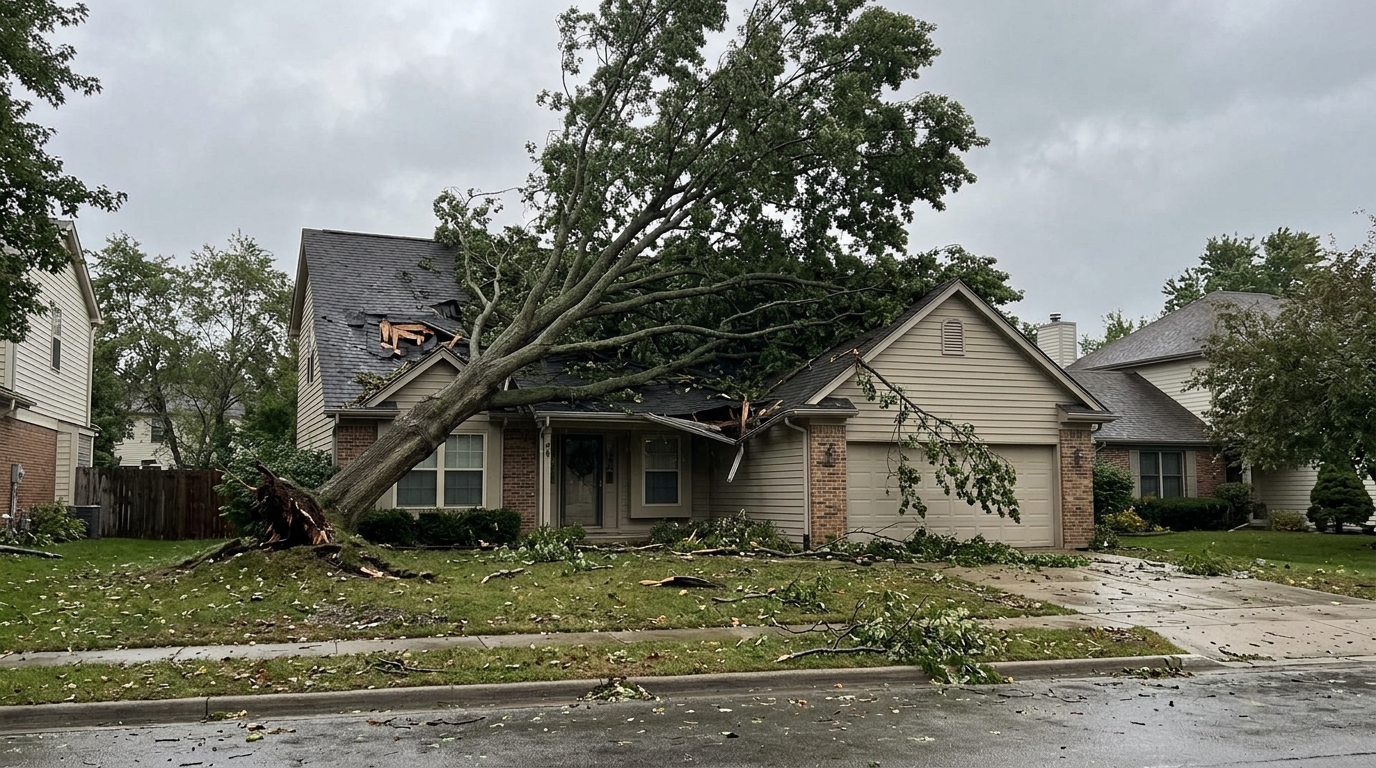
A crash, a shudder, and sudden silence can turn an ordinary storm into the longest night of your year. A tree on your roof leaves little time to think, yet the choices you make in the next few hours matter the most. Understanding how to respond when a tree falls on your roof helps keep your family safe, limit property damage, and support your insurance claim.
Take a breath, because this emergency roof protection guidekeeps things simple and calm. You will learn how to stay safe, what to document, who to call, and how coverage usually works. A table and quick, clear answers will keep everything easy to follow when stress runs high. Let’s begin.
First Steps When Tree Falls on Roof
Calm, quick decisions in the first hour protect everyone in your home.
Safe Exit and Safe Distance
Get everyone out first, including pets, and move well away from the damaged area. Leave right away if you see a sagging roof, cracked walls, or exposed wiring. These tree on roof safety precautions matter more than any belongings, so call 911 if anyone is hurt.
Hazards Around the House
Look for downed power lines near the tree, and stay far back. If the lights flicker or you smell gas, don’t flip any switches. Move away from the house and call 911, your utility company, and your gas company right away.
Checking Structural Damage After a Tree Fall
Do not go back inside until a professional says it is safe. A contractor or structural engineer should inspect for sagging rooflines, cracked walls, shifted doors, and broken beams. Hidden damage may not be obvious from outside, so wait for an expert opinion.
Damage Control for Your Roof and Insurance Claim
Once everyone is safe, your next job is to stop more damage and protect your claim.
Photos Before Any Cleanup
Take photos and video of the tree, roof, home interior, and any damaged belongings before cleanup starts. Capture wide shots and close-ups, and note the date and time. Your insurer will use these records to judge the damage.
Tarping Holes and Broken Windows
Call a contractor to tarp the roof and board up broken windows. Temporary repairs keep rain away from your ceilings and insulation, and most policies expect you to protect the home from more harm. Keep every receipt, because your insurer may ask for them.
Licensed Tree Removal
A licensed, insured tree removal company should cut the tree away, since one wrong move can drop limbs through the roof. Confirm the company has valid insurance coverage before the work begins. Sometimes the tree must come down before roof repairs can start.
Home Insurance Coverage for Fallen Trees
Standard policies generally cover damage when a tree hits an insured structure due to a covered event. Exclusions and deductibles apply. Removal limits vary, so contact your insurer. Your own policy may cover damage caused by a neighbor’s fallen tree.
A tarp buys you time, and a proper fix gives you peace. Impact Exteriors provides emergency storm damage repair for roofs hit by falling trees and heavy weather. Get in touch today and turn a stressful night into a solid plan!
Common Roof Hazards After a Tree Falls
Look out for these warning signs and follow the recommended steps to keep your household safe.
| Warning Sign | Possible Concern | Recommended Action |
| Sagging roofline | Structural damage | Stay outside and request a professional inspection |
| Cracked interior walls | Possible structural movement | Avoid the affected area |
| Exposed electrical wiring | Electrical hazard | Keep away and contact the utility company |
| Water entering the home | Further interior damage | Arrange professional temporary protection |
| Broken roof beams | Compromised roof support | Keep clear until an expert assesses the damage |
Frequently Asked Questions
Does home insurance cover fallen tree?
Standard homeowners policies generally cover damage to your home when a tree falls due to a covered event. Exclusions and limits apply, so review your policy and contact your insurer.
Who pays when a tree falls on a neighbor’s house?
The damaged homeowner can generally file a claim with their own insurer. A neighbor may be liable when evidence establishes negligence, depending on the circumstances and applicable law.
Should I tarp the roof myself?
Leave roof tarping to a qualified professional. A damaged roof may be structurally unsafe, making it dangerous to climb onto. Arrange temporary protection when safe.
How soon should I call my insurance company?
Contact your insurer as soon as you are safe. Report the incident, ask about policy requirements, and keep records of the damage and emergency repairs.
How can I tell if my roof is structurally damaged?
Look for sagging rooflines, cracked walls, sticking doors, and ceiling stains when checking structural damage after tree fall. Since hidden damage may not be visible, have a qualified professional inspect the home.
Conclusion
A tree on your roof is scary, but a clear plan makes it manageable. Use this emergency roof protection guide: get everyone safe, stay clear of hazards, document the damage, cover openings, and call your insurer. Let professionals handle the tree and the repairs. Acting quickly keeps a bad day from becoming a costly one.
A clear recovery plan helps you move forward with confidence after a tree damages your roof. Read our “post-storm damage timeline“ guide to understand the next steps after storm damage. Choose Impact Exteriors today for a clearer path to roof recovery!