
Summary:
Roof flashing is thin metal that seals weak roof joints. Around chimneys, valleys, and skylights, it guides water away from the structure. Aging metal, poor installation, and debris can cause leaks; warning signs include ceiling stains, rust, and damp insulation. Early inspection and prompt repair stop small leaks from becoming major water damage.
A water stain on your ceiling is a witness who points at the wrong suspect. The real culprit hides on the roof, usually at a seam where metal meets masonry or glass. That is where roof flashing works its shift every day. Once you understand how roof flashing protects homes, you can read a stain like a clue and trace it back to the source.
Chimneys, valleys, and skylights top the suspect list, because water gathers and pushes against their joints. Let’s investigate what flashing does, why it fails, and which warning signs matter most. A clear table and quick answers will help you close the case with full confidence.
What Is Roof Flashing on Chimney, Valleys, and Skylights?
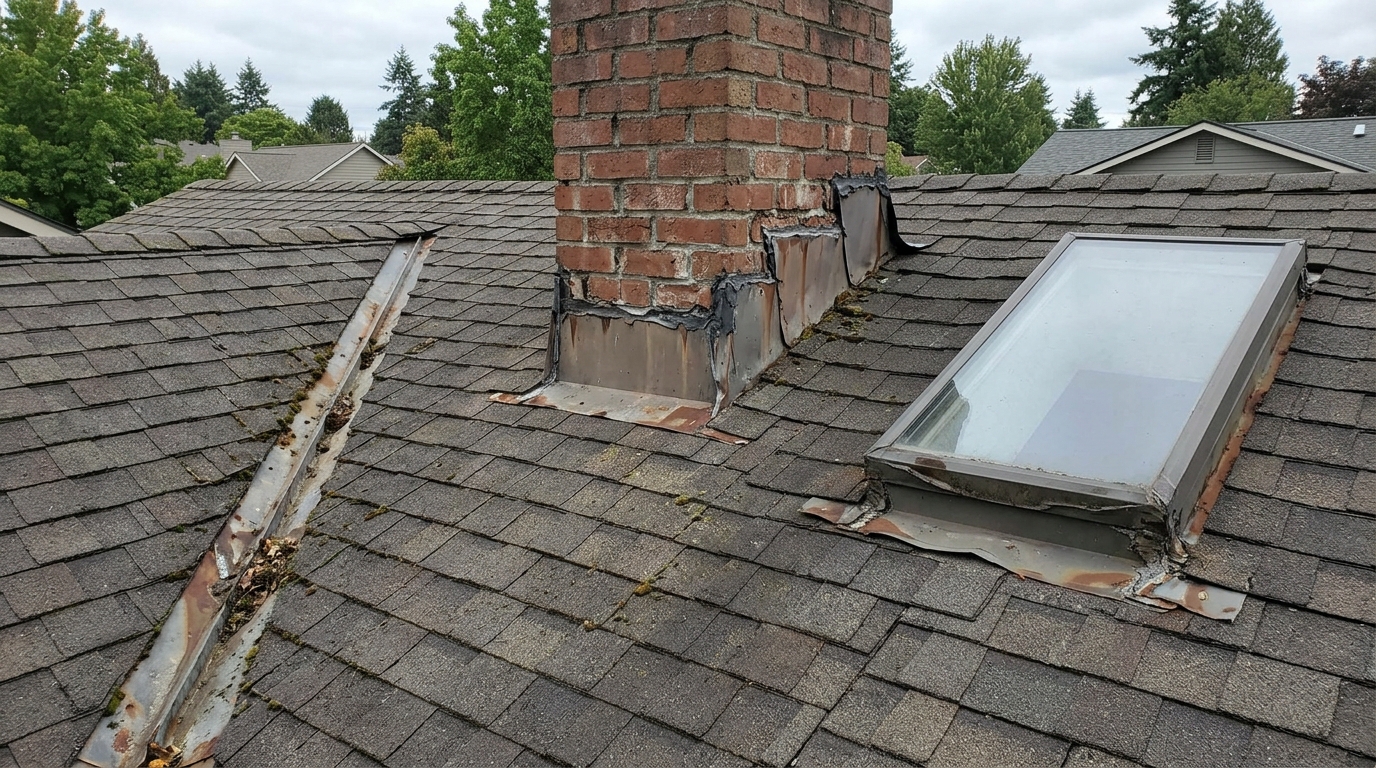
Roof flashing is thin metal that seals joints where your roof meets another surface. On chimneys, base pieces sit along the bottom, step pieces climb the sides, and counter pieces sit in the mortar above. Together, these layers guide rain safely around the brick.
Valleys channel runoff where two slopes meet, using exposed metal, woven shingles, or closed-cut systems. Skylights use compatible flashing kits, with base, side, and top pieces fitted around the frame. Flashing components overlap in layers, helping water flow over seams rather than behind them.
How Roof Flashing Protects Homes
Before we look at problem areas, it helps to know the basics.
Keeping Water Out of Weak Spots
Every roof seam gives water a chance to slip inside. Flashing sheds rain and melting snow over those seams and off the roof, so moisture never settles against the wood below. Heavy runoff in valleys and around chimneys makes this job even more important.
Safeguarding Your Home’s Structure
Dry framing, insulation, and ceilings remain better protected from moisture damage. When flashing does its job, rafters stay solid, insulation keeps its value, and moisture has less to feed on. Fixing a small flashing flaw early costs far less than repairing rotted wood and ruined drywall.
Extending the Life of Your Roof
Persistent moisture can rot decking, damage shingles, and deteriorate underlayment. Flashing helps protect vulnerable joints from moisture, reducing the risk of premature damage to surrounding roof materials. Dry seams also mean fewer repairs and fewer surprise bills.
Warning Signs Around Chimneys, Valleys and Skylights
Each trouble spot fails differently, so let’s check them one by one.
Chimney Flashing Problems
A chimney flashing system uses layered base, step, and counter pieces to wrap around the brickwork and seal the joint with the roof. Cracked mortar, loose metal, and gaps along the sides can allow water to seep beneath the flashing.
Valley Flashing Trouble Signs
Valleys carry water from two roof slopes, so they work hard in every storm. Watch for the signs of damaged valley flashing, like rust spots, bent or lifted metal, and debris that traps water. Debris, damaged metal, or signs of water intrusion below the valley warrant prompt inspection.
Skylight Leak Clues
Skylights add several seams to your roof. Common skylight flashing leak symptoms are drips during heavy rain, water stains on the ceiling near the frame, and peeling paint around the opening. Cracked sealant and worn flashing at the base are frequent culprits.
Clues Inside the House
Check your attic and ceilings after heavy rain. Damp insulation, peeling paint, musty smells, and stains near exterior walls point to a developing leak. Water can travel along rafters before dripping, so stains may appear far from the original leak.
Spotting a stain is easy; fixing it right is hard. Impact Exteriors offers expert roof flashing repair for the trouble spots that let water slip inside. Connect with us today and turn a worrying sign into a solid plan!
Common Roof Flashing Leak Causes and Solutions
Most leaks trace back to a few recurring problems.
| Cause | What happens | Where it shows up | Solution |
| Poor installation | Incorrect overlaps, improper fastening or poor integration with roofing layers can allow water to enter. | Chimney sides, wall joints and valleys | Re-lap or replace the flashing and fix the nail pattern |
| Aging and rust | Metal corrodes and deteriorates over time, eventually developing holes or openings. | Along older flashing edges | Replace the worn flashing sections |
| Worn sealant | Caulk cracks and pulls away from the joint | Skylight frames and chimney seams | Remove the old sealant and reseal the joint |
| Loose or lifted metal | Wind or movement leaves gaps along the edges | Roof edges and valley sides | Properly refasten or replace the loose flashing pieces. |
| Debris buildup | Leaves and sticks trap water against the seams | Valleys and around chimneys | Clear the debris and check the metal for damage |
| Storm damage | Strong wind or hail bends or loosens the metal | Any exposed flashing | Replace damaged flashing and check nearby shingles |
Frequently Asked Questions
What Is Roof Flashing on Chimney?
It is the metal that seals where the chimney meets the roof, made up of base, step, and counter pieces. Together, they guide water around the brick and away from the roof deck.
How do I know if valley flashing is damaged?
Look for the signs of damaged valley flashing: rust, lifted or bent metal, debris buildup, and stains below the valley. Any of these can let water reach the wood beneath your shingles.
Why does my skylight leak when it rains?
Worn flashing, cracked sealant, or a loose seal around the frame are common reasons. Watch for signs of a skylight flashing leak, like ceiling stains near the frame and drips during heavy rain.
When should a roofer inspect flashing?
Schedule a check after major storms and during routine roof checkups. Early inspection catches loose metal and failing sealant before water reaches your attic.
Does a flashing problem mean a full roof replacement?
Not usually. Some flashing problems affect one area, so a targeted repair may resolve them. A roofer should confirm how far the damage spreads before recommending anything bigger.
Conclusion
Roof flashing is a small part with a big job. Knowing the common roof flashing leak causes, like poor installation, aging sealant, and debris, helps you act early. Check chimneys, valleys, and skylights after storms, watch your ceilings, and call a pro when you see a stain. Small fixes made quickly protect your whole home.
Early attention is the best protection for your roof and your budget. Impact Exteriors offers a professional roof inspection that starts with a close look at your roof and ends with a clear explanation. Contact us today for answers that keep your home dry!