
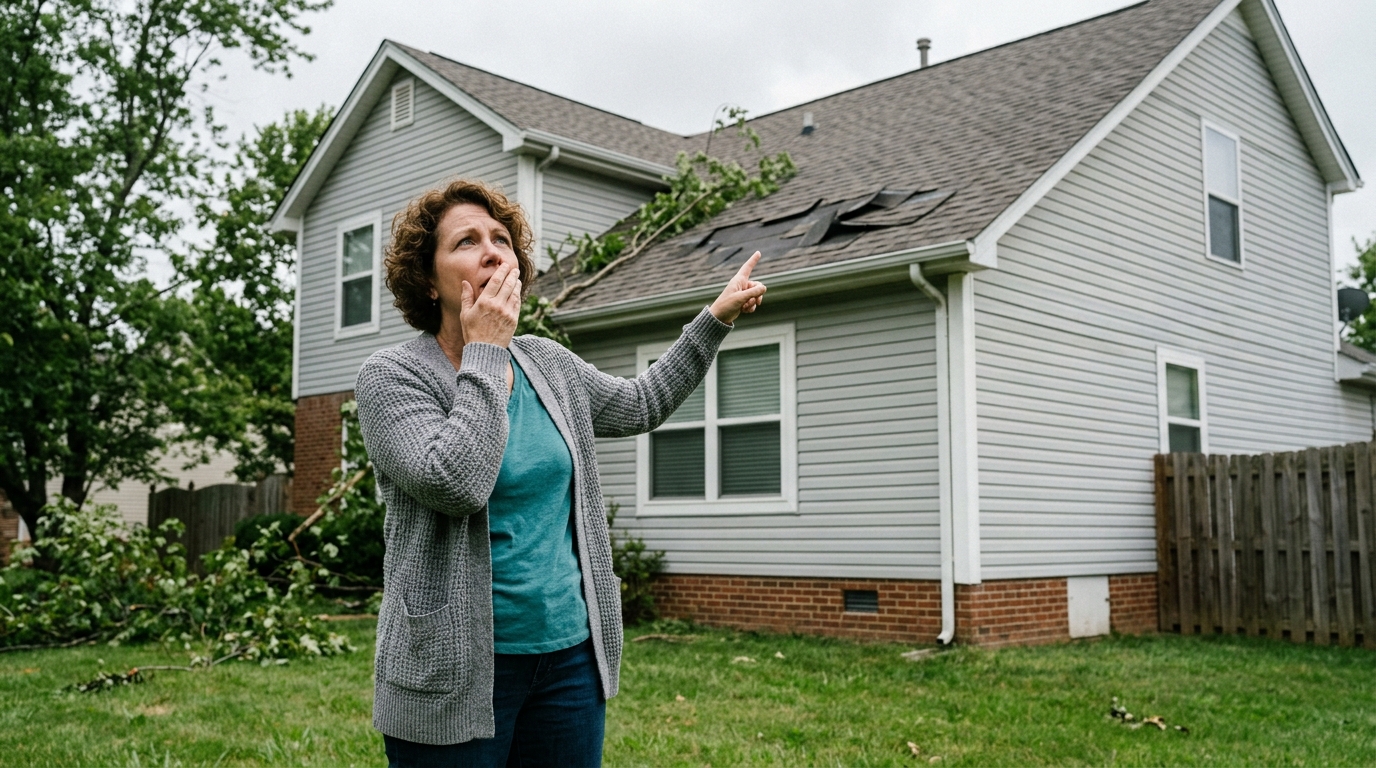
Summary:
Storm damage can often be identified safely from the ground by checking for missing or displaced shingles, damaged roof features, debris, dents, and other visible changes after severe weather. Ground-level observations, indoor warning signs, and professional inspections can help determine the extent of damage and when roofing assistance may be necessary.
A severe storm can leave a roof looking almost normal from the driveway, even when shingles, flashing, or other roofing components have been damaged. High winds, hail, falling branches, and heavy rain can create problems that are difficult to see from ground level, but there are several useful clues homeowners can check safely.
Learning how to check for roof storm damage without going on the roof makes it easier to notice potential problems from a safe distance. While a ground-level check cannot replace a professional roof inspection, it can reveal visible concerns that may warrant a closer look.
Start With a Safe Ground-Level Inspection
The safest place to begin is from several points around the property. Look at the roof from the front, back, sides, driveway, and yard. Binoculars can provide a closer view without requiring anyone to climb a ladder.
Pay attention to changes in the roof’s appearance compared with how it looked before the storm. Missing shingles, lifted edges, exposed underlayment, damaged vents, and sections that appear uneven can all justify further inspection.
· Look for Missing or Lifted Shingles
Shingles that are completely missing may leave darker patches or exposed areas beneath them. Lifted, curled, folded, or displaced shingles can also indicate wind-related damage.
Check roof edges and ridgelines carefully. These areas can make changes easier to notice because loose materials may appear uneven against the otherwise straight roofline.
· Check for Debris and Damaged Roof Features
Branches, broken limbs, and other debris around the home can provide clues about what happened during the storm. A fallen branch does not automatically mean the roof is damaged, but it can indicate an area that deserves closer attention.
Look at visible vents, chimneys, skylights, and metal flashing for anything that appears bent, displaced, or unusually exposed.
Signs of Roof Damage Visible From Ground
Some storm damage creates obvious visual changes, while other problems remain hidden until a professional inspection. Ground-level observations should focus on visible abnormalities rather than trying to diagnose the exact cause.
Here are some signs worth noting:
| Ground-level sign | What it may indicate | Recommended next step |
| Missing shingles | Possible wind damage | Arrange a professional inspection |
| Lifted or displaced shingles | Wind uplift or fastening problems | Have the affected area assessed |
| Dark or exposed patches | Missing roofing material or exposed underlayment | Request a roof inspection |
| Dented-looking roof areas | Possible hail impact | Have a roofer assess the surface |
| Damaged vents or flashing | Wind, hail, or debris impact | Arrange professional evaluation |
| Ceiling stains indoors | Possible water intrusion | Inspect the roof and interior promptly |
Wind Damage vs Hail Damage Roof Signs
Wind and hail can affect a roof in different ways. Understanding the basic visual differences can help homeowners describe what was noticed after a storm. Damage signs often come down to displacement versus impact. Wind commonly causes shingles to lift, crease, tear, or go missing. Hail can leave dents, bruised areas, cracks, or impact marks on shingles and other exposed roofing components.
Wind can also damage flashing, vents, gutters, and roof edges. Hail may affect gutters, downspouts, siding, window screens, and other outdoor surfaces at the same time. Looking around the entire property can therefore provide useful context.
Triple-I explains that hail damage can be difficult to detect and that roofs are particularly vulnerable to hail impacts.
· Check the Ground for Roofing Materials
Walk around the property without entering unsafe areas and look for loose roofing materials. Shingle fragments, pieces of flashing, or granules gathered near downspouts can provide clues.
Granules alone do not prove storm damage because normal aging can also cause granule loss. However, a noticeable change after a major storm can be worth documenting and discussing with a roofing professional.
· Look at Gutters and Downspouts
Gutters can reveal signs of impact or debris movement. Dents, detached sections, cracks, or unusual bends may suggest that the property experienced significant weather.
Check for excessive roofing granules around downspouts as well. This observation is useful as supporting evidence, but it should not be treated as a definite diagnosis.
· Check Inside the Home for Water Warning Signs
A roof inspection should not stop at the exterior. After heavy rain, check ceilings, upper-floor rooms, attics that can be safely accessed, and areas around skylights for water stains or damp spots. A new stain does not necessarily identify the exact location of a roof opening. Water can travel along roofing materials, framing, and insulation before becoming visible indoors.
Visible storm damage can make a professional assessment necessary. Homeowners can turn to Impact Exteriors, a roofing contractor in Herndon, VA, for help evaluating concerns identified during a ground-level roof check.
When to Call a Roofer After a Storm
Calling a roofer after a storm is important because waiting for obvious interior leaks can allow a small roofing problem to become more extensive.
A professional inspection is worth arranging after a major storm if shingles are missing, roofing materials appear displaced, branches have struck the roof, hail has fallen in the area, or visible flashing and vents appear damaged.
It is also sensible to seek an inspection when the roof looks different, but the cause is unclear. A professional can assess areas that cannot be safely evaluated from the ground and identify damage that may not be immediately obvious.
· Do Not Climb Onto the Roof
A wet, damaged, or debris-covered roof presents a fall hazard. Storm conditions can also leave roofing materials unstable.
There is little benefit in risking a personal injury to confirm something that a qualified roofing professional can inspect safely. Modern inspection methods can also include aerial imagery and other technology that helps evaluate inaccessible roof areas.
· Document What Can Be Seen Safely
Take photographs from the ground showing the roof, surrounding property, fallen branches, visible debris, and any apparent changes. Photos taken from multiple angles can create a useful record for a roofer or insurance company.
Do not disturb damaged areas unnecessarily. Keeping the scene documented can help professionals understand what happened and determine the appropriate next steps.
FAQS
Can roof storm damage be seen from the ground?
Yes. Missing or lifted shingles, damaged flashing, bent vents, unusual roof patterns, and visible debris can indicate storm damage. However, some issues, including certain hail impacts, may require a professional inspection to confirm.
How can homeowners check for storm damage without climbing onto the roof?
Use binoculars to inspect the roof from several safe ground-level positions. Look for missing shingles, exposed areas, dents, displaced materials, damaged roof features, and debris around the property. Avoid climbing onto the roof after a storm.
When should a roofer inspect a roof after a storm?
A roofer should inspect the roof if shingles are missing or displaced, hail has affected the area, branches have struck the roof, flashing appears damaged, or new water stains appear inside the home.
Conclusion
Checking a roof from the ground can provide valuable early clues after severe weather without creating the risks associated with climbing onto a damaged surface. Missing or lifted shingles, unusual roof patterns, damaged vents, dents, debris, and new indoor water stains all deserve attention.
A ground-level check should be treated as the first step, not a complete diagnosis. A free roof inspection after a storm can help identify concerns that are difficult to confirm from the ground, while a qualified roofer can assess the roof safely and explain appropriate repair options.
For homeowners seeking qualified roofers in Alexandria, VA, Impact Exteriors can provide professional roofing support focused on identifying problems and helping protect the home from further damage.